Choosing the best Potain Tower Crane in 2026 requires more than comparing maximum lifting capacity. Global buyers must examine working radius, site access, wind exposure, foundation design, transport limits, and local service support. A crane that performs brilliantly on a European high-rise site may struggle on a remote industrial project. Details matter.
Potain’s product range includes topless, hammerhead, luffing-jib, and self-erecting tower cranes. Each type answers a different construction problem. Topless models can simplify crowded sites with overlapping cranes. Luffing-jib cranes suit dense urban locations and restricted airspace. Self-erecting models can reduce setup time on smaller projects. The right choice depends on the complete site picture, not a brochure headline.
Aaron H. Ravenscroft, President and Chief Executive Officer of The Manitowoc Company, has stated, “Our focus is on delivering value to customers through innovation.” That principle is especially relevant when evaluating a Potain Tower Crane. Buyers should connect innovation with practical results, such as smoother load control, clearer operator information, lower assembly effort, and dependable telematics. Technology alone is not enough.
A useful comparison also considers fleet age, spare-parts availability, operator training, maintenance records, and regional dealer experience. Ask difficult questions. Can the crane reach the required height without costly modifications? Will the foundation suit local ground conditions? Is the quoted capacity realistic at the farthest radius?
No single model wins everywhere. This guide explores the leading Potain Tower Crane types for global buyers in 2026, while recognizing one uncomfortable truth: project data is often incomplete. Better decisions come from careful verification, experienced inspection, and honest discussion with qualified Potain representatives.
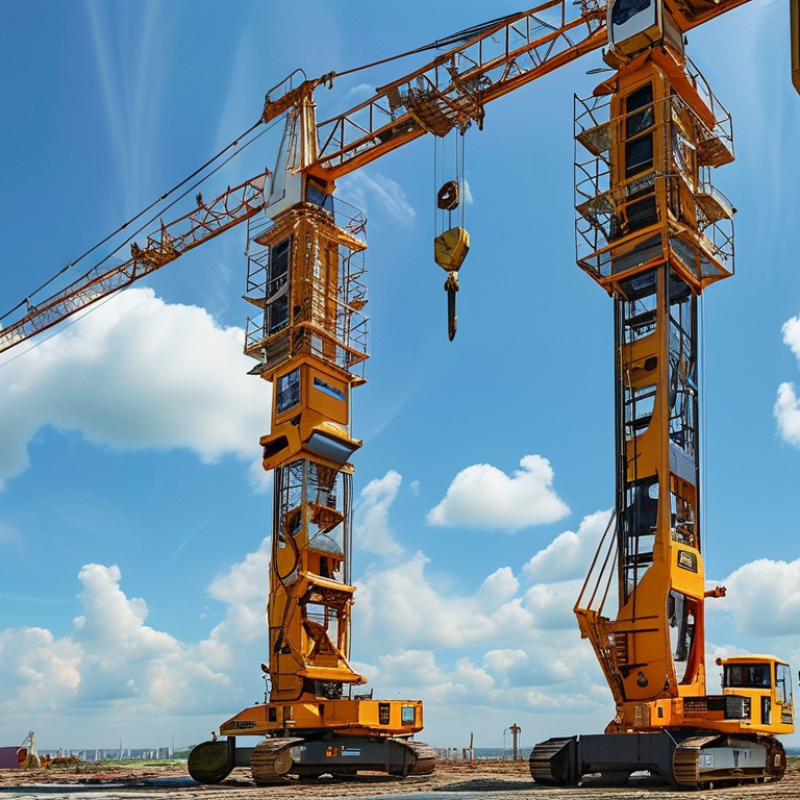
A tower crane is a vertical lifting system built around a steel mast, slewing unit, horizontal jib, trolley, and counter-jib. The mast transfers loads into a reinforced foundation or climbing frame. At the top, the slewing mechanism turns the jib across the work area. A trolley moves the hook along the jib, while wire ropes control lifting and lowering. Small details matter.
Common configurations include flat-top, hammerhead, and luffing-jib cranes. Flat-top models suit open sites with several cranes because their jibs can maintain safer clearances. Hammerhead designs provide strong horizontal coverage for housing and commercial projects. Luffing-jib cranes work better beside tall buildings or on narrow urban sites. Their angled jibs reduce interference, but operators need more careful coordination.
On site, crane selection depends on more than maximum capacity. Buyers should check rated load at the jib tip, maximum lifting moment, mast height, foundation requirements, wind limits, and power supply. A 10-ton crane may lift that weight near the mast, not at full reach. That distinction is often misunderstood. Construction teams use these cranes for concrete buckets, reinforcement cages, steel beams, façade panels, and prefabricated modules. Experienced planners also review transport sections, assembly access, maintenance support, and operator visibility. A perfect specification sheet can still fail when the site road is too narrow or the foundation design is weak.
Tower crane selection starts with the site, not the catalogue. Hammerhead cranes suit repetitive lifting across broad, open projects. Their horizontal jibs provide predictable coverage and efficient trolley movement. Flat-top cranes work well where several cranes overlap. They reduce upper interference because no tower head rises above the jib. That detail matters on dense urban sites.
Luffing-jib cranes are more suitable for narrow plots and tall buildings. Their jibs raise steeply, limiting swing over neighboring properties. Self-erecting cranes support smaller residential projects and shorter schedules. They usually need less transport equipment and can fit beside existing roads. Space matters. However, their capacity and height are more limited.
Fortune Business Insights estimated the global tower crane market at about 7.24 billion dollars in 2023. Its report projects continued growth through 2032, driven by urban construction and infrastructure investment. This supports demand, but market growth does not guarantee a suitable machine. Buyers should compare maximum load, tip load, working radius, wind limits, foundation design, and local electrical standards. A 2024 industry outlook from Research and Markets also highlights rental activity as a major purchasing influence. Rental availability can affect spare parts and operator familiarity. In my experience, buyers sometimes overvalue maximum capacity and overlook transport width. That is an expensive mistake. A practical review should include lifting charts, assembly time, inspection records, and service response in the target country. Reports provide direction. Site data makes the final decision.
Key tower crane types and their distinctive features
Fast deployment and compact transport requirements make this type suitable for low- to mid-rise projects and restricted urban sites.
A horizontal jib with a trolley-based lifting system offers familiar operation and efficient coverage on conventional building sites.
The jib has no overhead A-frame, making it useful where cranes must work close together or be dismantled in confined conditions.
The variable-angle jib reduces oversailing and is well suited to dense city centers, tall buildings, and sites with limited airspace.
Capacity figures show representative upper ends of common industry project ranges in metric tonnes. Actual capacity depends on jib length, radius, tower height, configuration, wind conditions, and local regulations.
Matching tower-crane types to project requirements starts with the building, not the catalogue. A hammerhead crane suits wide sites with repeated lifting zones and moderate height. A luffing-jib crane works better beside high-rise buildings or crowded city streets. Its jib can rise steeply, reducing swing over roads and neighboring properties. A self-erecting crane may fit small residential projects, where rapid setup matters more than extreme capacity. It is often overlooked.
Review the load chart carefully. A 10-ton maximum capacity means little if the crane lifts only two tons at the required radius. Record the heaviest load, farthest lifting point, floor-cycle target, foundation limits, and available power. According to the 2024 Associated General Contractors workforce survey, 94% of contractors reported difficulty filling positions. Simpler erection and remote diagnostics may therefore reduce dependence on scarce specialists. Still, technology cannot replace a competent lift plan.
Site logistics also change the answer. The 2024 Global Construction Perspectives report highlights continuing pressure on construction productivity and project delivery. This supports choosing equipment that reduces repositioning and waiting time. However, productivity estimates can be optimistic. Wind exposure, delivery delays, and restricted access often defeat clean calculations. I would compare at least three operating scenarios before purchase: normal production, peak lifting, and partial shutdown. A crane that looks oversized on paper may prove cheaper when transport, assembly, permits, and idle hours are included. Smaller is not always efficient.
Global buyers should match crane configuration to the work, not only advertised capacity. Mordor Intelligence’s 2024 Tower Crane Market report estimates growth from about USD 7.72 billion in 2024 to USD 10.15 billion by 2029. That expansion reflects continued demand for urban construction and infrastructure. A hammerhead crane suits repetitive lifting on open sites. A luffing-jib model performs better beside neighboring buildings and restricted airspace. Self-erecting cranes can reduce setup time on smaller projects.
Capacity is not reach.A 10-tonne maximum load may fall sharply near the jib tip. Buyers should examine the complete load chart, maximum free-standing height, anchoring intervals, and foundation pressure. A practical review also checks wind limits, power supply, transport access, and local lifting regulations. The International Organization for Standardization’s crane safety standards emphasize stability, inspection, and competent operation. These points matter more than brochure speed.
Small sites punish bad choices. A congested 12-by-12-meter plot may favor a luffing jib with compact counter-jib clearance. A broad logistics yard may justify a longer fixed jib and higher lifting capacity. The Global Construction Perspectives and Oxford Economics outlook has projected strong long-term construction demand, but regional conditions remain uneven. That forecast should guide planning, not replace it. I would also challenge optimistic cycle-time claims. Real projects lose hours to wind, deliveries, foundation work, and changing lift paths. A careful buyer compares total installed cost, not purchase price alone.
Choosing a tower crane in 2026 starts with the site, not the brochure. Flat-top units suit repetitive urban lifts, while luffing-jib cranes reduce oversailing risks beside airports or dense housing. Self-erecting models can simplify smaller projects, but their capacity and wind limits deserve blunt scrutiny. That choice is easy to underestimate. The International Labour Organization reported nearly 2.93 million work-related deaths annually, with about 395 million nonfatal injuries worldwide in 2023. Crane selection should therefore include emergency access, operator visibility, wind monitoring, load-control systems, and documented maintenance.
Regional compliance changes the buying process. European projects commonly review EN 14439, local machinery rules, and site-specific lifting plans. North American buyers often check OSHA 1926 Subpart CC and ASME B30.3 requirements. Australia uses detailed crane standards and state-based registration systems. Middle Eastern and Asian projects may require additional municipal permits, approved engineers, or language-specific manuals. Confirm the current rule locally. Standards can be interpreted differently.
Transport can change the purchase decision. A twelve-metre jib section may need route surveys, axle-load checks, escorts, and temporary road closures. Port access, customs documentation, and regional spare-parts availability also affect delivery risk. Ask for dismantling weights, packing dimensions, foundation reactions, wind limitations, and commissioning records before signing. The 2024 UNEP Global Status Report states that buildings and construction consumed about 32% of global energy and produced 34% of energy-related carbon dioxide emissions in 2022. Electric drives may reduce site emissions, but grid quality and backup power remain practical concerns. Some quotations look complete until transport and certification costs appear.
A practical comparison of major tower-crane configurations for international purchasing. Capacity, dimensions, transport quantities, and compliance requirements are planning ranges only; the final selection must be verified against the manufacturer’s certified load charts, site conditions, local authority requirements, and project-specific engineering documents.
| Crane Type | Typical Rated Load Range | Typical Maximum Jib Range | Best Project Applications | Main Safety and Site Considerations | Transport and Installation Profile | Regional Suitability | Purchase Considerations for 2026 |
|---|---|---|---|---|---|---|---|
| Flat-Top Tower Crane | Approximately 4–25 tonnes, depending on model and jib configuration. | Approximately 30–80 m; shorter jib lengths normally provide higher tip capacity. | High-rise residential buildings, commercial developments, industrial projects, and sites requiring several cranes to work at different elevations. | Requires engineered foundations or an approved anchoring system, controlled slew zones, anti-collision planning where cranes overlap, and verified wind limits. | Usually transported in multiple truckloads. Modular mast sections and separate jib sections simplify logistics, but a mobile crane is normally required for erection. | Europe Middle East Asia-Pacific Latin America | A strong general-purpose option when site geometry is uncomplicated. Compare load charts, mast compatibility, erection method, electrical supply, and availability of spare components. |
| Hammerhead Tower Crane | Approximately 5–25 tonnes, with capacity varying significantly by jib length and reeving arrangement. | Approximately 35–85 m. | Large construction sites, infrastructure projects, precast handling, and projects where horizontal trolley travel is preferred. | The horizontal jib can create a large oversailing envelope. Check neighboring property rights, public-road protection, slew restrictions, tie-in levels, and load-control procedures. | The tower head and jib are generally shipped as separate components. Transport planning should include permitted road width, axle loads, lifting points, and temporary storage space. | Large urban sites Infrastructure Open sites | Prefer configurations with documented fatigue calculations, overload protection, reliable limit switches, and a clear service plan for brakes, ropes, sheaves, and control systems. |
| Luffing-Jib Tower Crane | Approximately 5–32 tonnes, subject to jib length, counterweight arrangement, and operating radius. | Approximately 25–60 m; reduced radius is a key operating advantage. | Dense urban construction, tall buildings, restricted sites, airports, and projects with multiple cranes operating close together. | Requires accurate luffing-angle control, rated wind-speed limits, safe out-of-service positioning, and careful coordination of the raised jib with nearby buildings and cranes. | More compact on the jobsite than a long horizontal-jib crane, but the luffing mechanism, pendants, hydraulic or mechanical components, and counterweights can increase erection complexity. | Dense cities High-rise Restricted airspace Tight plots | Often the best choice where oversailing must be minimized. Confirm luffing cycle time, emergency lowering provisions, wind monitoring, maintenance access, and operator training requirements. |
| Self-Erecting Tower Crane | Approximately 1–8 tonnes, commonly selected for light and medium construction work. | Approximately 20–45 m. | Low-rise housing, small commercial buildings, farm structures, renovation work, and projects with frequent relocation. | Ground bearing capacity, outrigger support, leveling, wind exposure, and setup clearance are critical. The machine must be operated only within the approved configuration and load chart. | Usually faster to deploy than a conventional tower crane and may be transported on a specialized trailer. Local road regulations can determine whether an escort or transport permit is necessary. | Small sites Rural projects Short-term work | Compare setup time, transport width, axle weight, hydraulic maintenance, remote diagnostics, and whether the machine can be legally moved between planned sites. |
| Travelling Tower Crane | Approximately 4–20 tonnes, depending on rail layout, tower height, and jib arrangement. | Approximately 30–70 m. | Long industrial buildings, bridges, repetitive structures, shipyards, and sites where a crane must cover a linear work zone. | Requires engineered rails, rail stops, end buffers, travel-limit systems, level alignment, and protection against unintended movement or track settlement. | Transport includes crane sections plus rail components and foundations. Installation time increases with rail length, ground preparation, and alignment tolerances. | Industrial sites Bridges Repetitive layouts | Evaluate rail installation cost, travel speed, wheel loads, weather exposure, inspection access, and whether the project schedule justifies the additional track infrastructure. |
| Climbing or Internal-Climbing Tower Crane | Approximately 6–30 tonnes, based on tower design and climbing frame capacity. | Approximately 30–70 m. | Very tall buildings where the crane must climb with the structure or operate from inside a building core. | Requires specialist structural design for climbing frames, temporary openings, load transfer, tie-ins, wind effects, evacuation, and coordination with permanent building works. | Initial transport is modular, but installation and each climbing operation require specialist equipment, sequencing, and controlled work permits. | High-rise Core construction Complex urban sites | Select only with an experienced erection contractor and a documented climbing method statement. Verify building-interface loads before ordering the crane system. |
| Compact Topless Crane for Confined Sites | Approximately 2–12 tonnes, commonly used where compact dimensions are more important than maximum capacity. | Approximately 20–50 m. | Urban infill, renovation, courtyards, narrow plots, and projects with limited assembly or storage areas. | Requires precise site logistics, protected pedestrian routes, controlled slewing, clear emergency access, and reliable communication between the operator and lifting team. | Smaller components can reduce transport and storage requirements. A suitable mobile crane or compact lifting system is still needed for assembly in most cases. | Urban infill Renovation Limited access | Prioritize minimum erection radius, component weights, power compatibility, remote-control options, and the availability of local technicians and inspection services. |