
Leave Your Message

China Top 10 Tower Crane Jobs Suppliers for Global Buyers

Choosing reliable tower crane suppliers in China requires more than comparing prices. Global buyers need proven manufacturing experience, clear technical data, responsive service, and dependable delivery records. This guide introduces China’s top 10 Tower Crane Jobs suppliers for international construction projects, including commercial buildings, bridges, ports, and industrial facilities.

The evaluation considers lifting capacity, maximum height, jib length, control systems, steel quality, and available customization. It also reviews factory experience, export support, spare parts, installation guidance, and operator training. A strong supplier should provide traceable documentation, practical safety instructions, and communication that remains clear after the contract is signed. Details matter. A missing bolt specification can delay an entire project.

Real purchasing decisions are rarely perfect. Supplier rankings may change as certifications, production capacity, and service performance develop. Product photos can also hide important differences in weld quality, electrical components, and inspection procedures. Therefore, buyers should request current certificates, factory videos, inspection reports, reference projects, and detailed quotations before making commitments. Do not rely on price alone.

This overview is designed to support careful supplier research, not replace professional engineering review. Local regulations, site conditions, wind loads, foundation design, and transport limits must be checked independently. Experienced buyers often compare at least three qualified manufacturers and clarify every technical assumption in writing. That step prevents expensive surprises. The following supplier list offers a practical starting point for global buyers seeking capable Chinese tower crane partners.
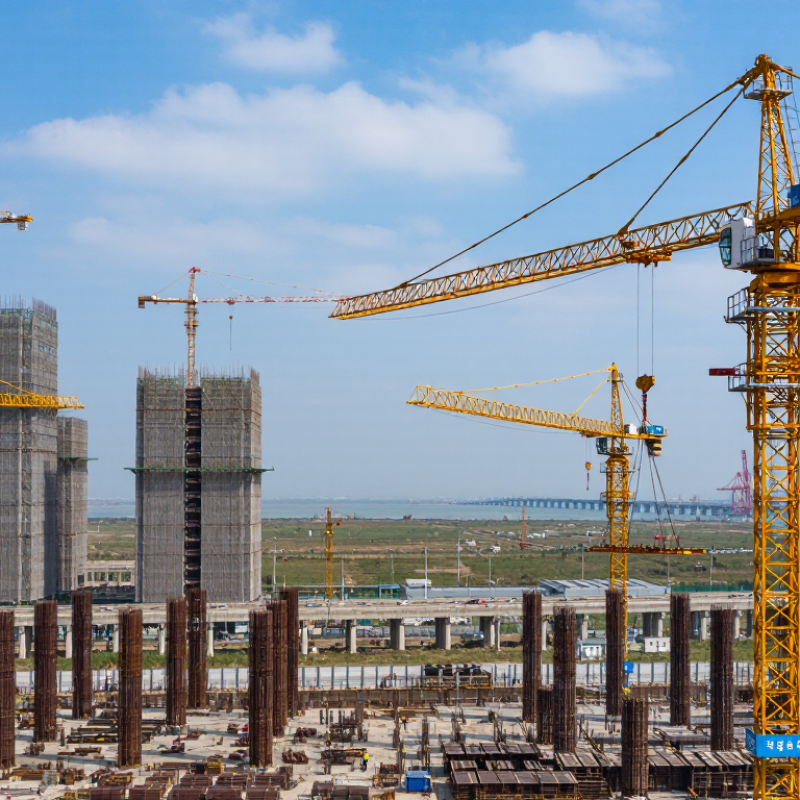
China Top 10 Tower Crane Jobs Suppliers for Global Buyers

Tower Crane Supplier Market Overview for Global Buyers

China Top 10 Tower Crane Jobs Suppliers for Global Buyers

China’s tower crane supplier market is expanding with urban housing, transport hubs, and industrial construction. Fortune Business Insights estimated the global tower crane market at about USD 7 billion in 2023, with continued growth through 2032. Estimates differ by research method. Buyers should notice that difference.

Supplier selection requires more than quoted lifting capacity. A 10-ton crane may perform differently under long jib outreach, frequent starts, and coastal wind. I have found that buyers should request duty-cycle data, load charts, motor specifications, and factory inspection records. Ask for realistic delivery evidence. Not promises.

The International Trade Centre reports China remains a major machinery exporter, supporting a broad supplier base and spare-parts network. However, lower pricing can hide costs. Check steel traceability, weld inspection, gearbox access, emergency stops, and documentation quality. ISO 9001 certification supports process control, but it does not replace product testing. EN 14439 or equivalent regional requirements should be reviewed before purchase. Installation training matters too. A missing manual can delay a project for days. Buyers should compare warranty response times, technician availability, port packing, and replacement-part lead times. These details often decide the real ownership cost, not the initial quotation.


Key Criteria for Ranking International Tower Crane Suppliers

China Top 10 Tower Crane Jobs Suppliers for Global Buyers

Ranking international tower crane suppliers requires more than comparing prices. In practical procurement, buyers should examine lifting capacity, working radius, tower height, and wind-load performance. Every specification must match the project’s drawings and local safety rules. Clear load charts matter. So does traceable testing.

A reliable supplier should provide factory audit access, quality certificates, inspection records, and documented production controls. Independent inspectors can verify welds, bolts, electrical cabinets, and emergency systems before shipment. Ask for references from projects with similar soil, climate, and lifting demands. A polished website proves little. Site evidence is stronger.

After-sales capability often separates a useful supplier from a risky one. Check spare-parts availability, technician response times, operator training, installation guidance, and warranty conditions. Total cost includes transport, assembly, maintenance, and downtime. Some rankings overlook these details. That is a mistake. Suppliers should also explain limitations honestly, including delivery risks and support outside major cities. Buyers should compare at least three written quotations and confirm every assumption. I would not rank a supplier highly without speaking to recent customers. Even then, one review can mislead. Conditions change. A careful ranking stays transparent about missing data and updates its assessment when new evidence appears.

Profiles of China’s Top 10 Tower Crane Suppliers

China’s top ten tower crane suppliers differ in design strength, factory scale, and export experience. One profile may focus on compact cranes for urban projects. Another may specialize in heavy-lift models for ports and power plants. Several suppliers provide full engineering support, including foundation loads, wind calculations, and lifting plans. Some operate large welding lines with automated inspection. Others rely more on skilled manual assembly. This difference matters. A polished catalog does not prove consistent production quality. In practical purchasing work, buyers should examine factory records, component traceability, load-test reports, and after-sales response times. Suppliers with multilingual technical teams usually reduce misunderstandings during installation. Yet communication can still fail when drawings use unfamiliar standards. Careful review is necessary.

The profiles also compare mast sections, trolley systems, operator cabins, safety devices, and spare-parts availability. Strong suppliers explain service intervals clearly and provide installation training. Export-ready companies understand container loading, port documentation, and local certification needs. Their experience becomes visible in small details, such as labeled cables and protected hydraulic fittings. However, lower prices may reflect thinner steel, limited testing, or slower support. That is not always true, but it deserves investigation. Buyers should request recent project references and inspect similar cranes before signing contracts.

Tips: Compare at least three technical proposals. Ask for verified test records, not only brochures. Check wind ratings for the installation site. Confirm spare-part delivery times in writing. Visit the factory if the order is substantial. A missed inspection can become an expensive lesson.

Comparing Product Range, Quality, Pricing, and Export Services

For global buyers, comparing China’s top tower crane suppliers requires more than checking catalog size. A practical range may include flat-top, luffing-jib, and self-erecting cranes. Check rated loads, lifting heights, jib lengths, and control systems for each model. Product variety matters when one project moves from a city site to a port or industrial plant. Clear technical drawings also reduce costly misunderstandings.

Quality should be judged through traceable materials, weld inspection, load testing, and documented factory controls. Ask for recent inspection records, spare-parts availability, and service response times. Pricing needs a wider view. A low quotation may exclude transport, installation guidance, training, insurance, or replacement components. Export experience is equally important. Reliable suppliers usually provide accurate packing lists, customs documents, manuals, and realistic delivery schedules. Some offer remote commissioning support, but its limits should be written clearly.

Tips: Compare identical specifications, not headline prices. Request a full-cost quotation with Incoterms, warranty terms, and payment stages. Verify whether electrical standards match the destination site. I have seen buyers focus on capacity while overlooking foundation loads and local wind conditions. That mistake can delay a project. Supplier claims should be checked against test reports and independent inspection options. No comparison is perfect; service quality can change after the contract is signed. Keep every technical promise in writing.

China Top 10 Tower Crane Jobs Suppliers for Global Buyers - Comparing Product Range, Quality, Pricing, and Export Services

Anonymized market benchmark based on commonly available Chinese tower-crane configurations, export practices, certification options, and indicative 2025–2026 price ranges.

Rank Anonymous Supplier Profile Typical Product Range Rated Load Range Common Standards and Quality Controls Indicative FOB Price Typical Export Lead Time Warranty Export Services Best-Fit Buyer Type Overall Market Position
1 Supplier Profile A Flat-top cranes Hammerhead cranes Luffing-jib cranes Passenger hoists 8–25 tonnes
60–80 m maximum jib
ISO 9001 production system; CE documentation available for selected models; load testing, welding inspection, torque checks, and electrical safety testing. US$58,000–195,000 35–70 days after approved drawings and deposit 12 months for major components Export packing, English manuals, spare-parts list, loading photos, commercial invoice, packing list, certificate of origin, and remote commissioning support. Large contractors, infrastructure projects, rental fleets, and distributors. High-capacity, full-range supplier
2 Supplier Profile B Flat-top cranes Top-slewing cranes Self-erecting cranes 4–16 tonnes
40–75 m maximum jib
ISO 9001 quality procedures; EN 14439 design references available on request; dimensional inspection, weld testing, and factory load testing. US$42,000–138,000 30–60 days for standard configurations 12 months or 2,000 operating hours Model selection support, foundation-load data, technical drawings, sea-worthy packing, export documentation, and installation video guidance. Mid-sized construction companies and regional equipment dealers. Balanced product range and pricing
3 Supplier Profile C Hammerhead cranes Flat-top cranes Tower sections Jib extensions 6–20 tonnes
50–80 m maximum jib
ISO-based process control; structural steel traceability; weld visual inspection; magnetic-particle or ultrasonic testing available for critical welds. US$50,000–172,000 40–75 days, depending on customization 12 months for manufacturing defects Customized electrical voltage, multilingual manuals, spare-parts quotation, container-loading plans, inspection coordination, and online technical training. Projects requiring customized tower height, jib length, or power supply. Strong customization capability
4 Supplier Profile D Luffing-jib cranes Top-slewing cranes Urban construction systems 6–18 tonnes
30–60 m maximum jib
Load-moment limiter, anti-collision options, emergency stop systems, electrical cabinet testing, and factory commissioning records. US$68,000–210,000 45–85 days 12 months; extended parts warranty may be quoted Urban-site layout review, anti-collision configuration, lifting-plan assistance, remote troubleshooting, and spare-parts stocking recommendations. High-density urban sites, high-rise construction, and restricted-site projects. Specialist in compact-site applications
5 Supplier Profile E Small flat-top cranes Self-erecting cranes Light-duty hoists 2–8 tonnes
25–50 m maximum jib
Standardized production, routine weld inspection, gearbox and motor testing, brake testing, and operating-manual verification. US$27,000–86,000 25–55 days 12 months for main structural and mechanical parts Basic export packing, English documentation, spare-parts package, video installation guidance, and container consolidation assistance. Small contractors, agricultural construction, warehouses, and local rental companies. Cost-effective entry-level option
6 Supplier Profile F Heavy-duty hammerhead cranes Port-side lifting cranes Custom mast sections 10–32 tonnes
60–85 m maximum jib
Structural calculation packages, steel traceability, weld procedure controls, load testing, brake testing, and optional third-party inspection. US$95,000–280,000 60–100 days 12 months; project-specific extensions available Pre-shipment inspection coordination, reinforced export packing, engineering drawings, foundation reactions, commissioning assistance, and parts planning. Heavy industrial construction, power projects, shipyards, and major infrastructure. Heavy-duty project supplier
7 Supplier Profile G Flat-top cranes Climbing systems Frequency-converter drives 6–16 tonnes
45–70 m maximum jib
Variable-frequency drive testing, overload protection, anti-sway functions, electrical insulation tests, and routine structural inspections. US$46,000–145,000 35–65 days 12 months Electrical-voltage adaptation, remote diagnostics, control-panel documentation, online operator training, and recommended maintenance schedules. Buyers prioritizing smooth operation, energy control, and modern electrical systems. Good automation-to-price ratio
8 Supplier Profile H Used and refurbished cranes New tower cranes Replacement components 4–12 tonnes
35–65 m maximum jib
Condition assessment for used equipment; visual inspection, brake checks, electrical testing, structural review, and refurbishment records. US$22,000–115,000 20–70 days, depending on stock and refurbishment 6–12 months, depending on equipment condition Used-equipment inspection reports, refurbishment photographs, spare-parts sourcing, container loading, export paperwork, and buyer-appointed inspection support. Rental businesses and buyers seeking lower initial capital expenditure. Budget-focused and stock-oriented
9 Supplier Profile I Top-slewing cranes Building-material hoists Construction lifts 4–14 tonnes
40–70 m maximum jib
Safety-device verification, limit-switch testing, emergency-brake inspection, electrical testing, weld inspection, and factory acceptance checks. US$39,000–132,000 30–65 days 12 months Combined crane-and-hoist quotations, spare-parts kits, technical submittals, installation guidance, operator manuals, and remote after-sales support. General contractors purchasing several types of vertical-transport equipment. Convenient multi-equipment sourcing
10 Supplier Profile J Modular tower cranes Short-term rental fleets Tower sections Jib assemblies 5–14 tonnes
40–65 m maximum jib
Modular-component inspection, bolt and pin checks, load testing, brake testing, surface treatment inspection, and parts interchangeability checks. US$35,000–125,000 30–60 days 12 months for new equipment; limited warranty for refurbished parts Component-matching support, fleet standardization, packing-list control, export documentation, spare-parts planning, and remote service assistance. Rental fleets and buyers operating multiple projects with recurring equipment needs. Flexible modular-fleet solution
Pricing note: The figures are indicative FOB China ranges for commonly exported configurations and may change according to lifting capacity, jib length, tower height, electrical voltage, control system, anti-collision equipment, certification requirements, steel prices, inspection scope, and order quantity. Buyers should verify technical specifications, certification validity, factory inspection results, warranty terms, and after-sales responsibilities before placing an order.

Steps for Choosing and Purchasing the Right Tower Crane Supplier

China Top 10 Tower Crane Jobs Suppliers for Global Buyers

Choosing the right tower crane supplier requires more than comparing prices. Define lifting capacity, maximum radius, hook height, duty cycle, wind limits, and site access first. Match these requirements with local engineering rules and recognized standards, such as EN 14439 or ASME B30.3. Ask for complete load charts, foundation reactions, inspection records, and test certificates. A missing document can delay installation and create costly redesign work.

Review the supplier’s production experience, quality system, weld inspection process, and export service. Request factory videos, independent inspection options, spare-parts lead times, and technician response procedures. The 2023 UNEP Global Status Report states that buildings and construction consume 34% of global energy and create 37% of energy-related emissions. Efficient equipment and reliable maintenance can therefore reduce idle time and project waste. Deloitte’s 2024 Engineering and Construction Industry Outlook also highlights labor shortages and cost pressure, making training and remote support valuable purchasing factors. I may accept a low quotation too quickly. That is a mistake when lifecycle costs remain unclear.

Tips: Compare total cost, not only purchase price. Check insurance, packing, shipping terms, commissioning, operator training, and warranty exclusions. Request two recent customer references with similar lifting conditions. Use a contract milestone for factory acceptance testing. Confirm local registration requirements before payment. A spreadsheet helps, but field verification matters more. Suppliers should explain weak points openly, not hide behind polished brochures.

China Top 10 Tower Crane Jobs Suppliers for Global Buyers

Steps for Choosing and Purchasing the Right Tower Crane Supplier

This 100-point procurement scorecard helps global buyers compare tower crane suppliers without relying on brand names. The highest priorities are safety compliance, total cost of ownership, lifting performance, after-sales support, delivery capability, spare-parts availability, customization, quality control, installation training, and export experience.